If your old Jeep Wrangler JK is throwing a dim, yellowed beam down the trail and you're tired of squinting through the dark, you're probably searching for an upgrade that actually fits right out of the box. That is exactly where TRUE MODS 7 Inch LED Headlights Round for 2007-2018 come into play. We spent weeks digging through verified buyer feedback, manufacturer datasheets, and beam-pattern tests across dozens of 7-inch LED replacements to figure out which options are worth your money.
Worth it if you want a direct bolt-on swap that brightens your night drives without rewriting your wiring harness. Skip it if you need throw distance over flood spread or if your budget caps out below the mid-range tier. Let us walk through everything we found after sifting through hundreds of real-world reports and spec comparisons.

What it is
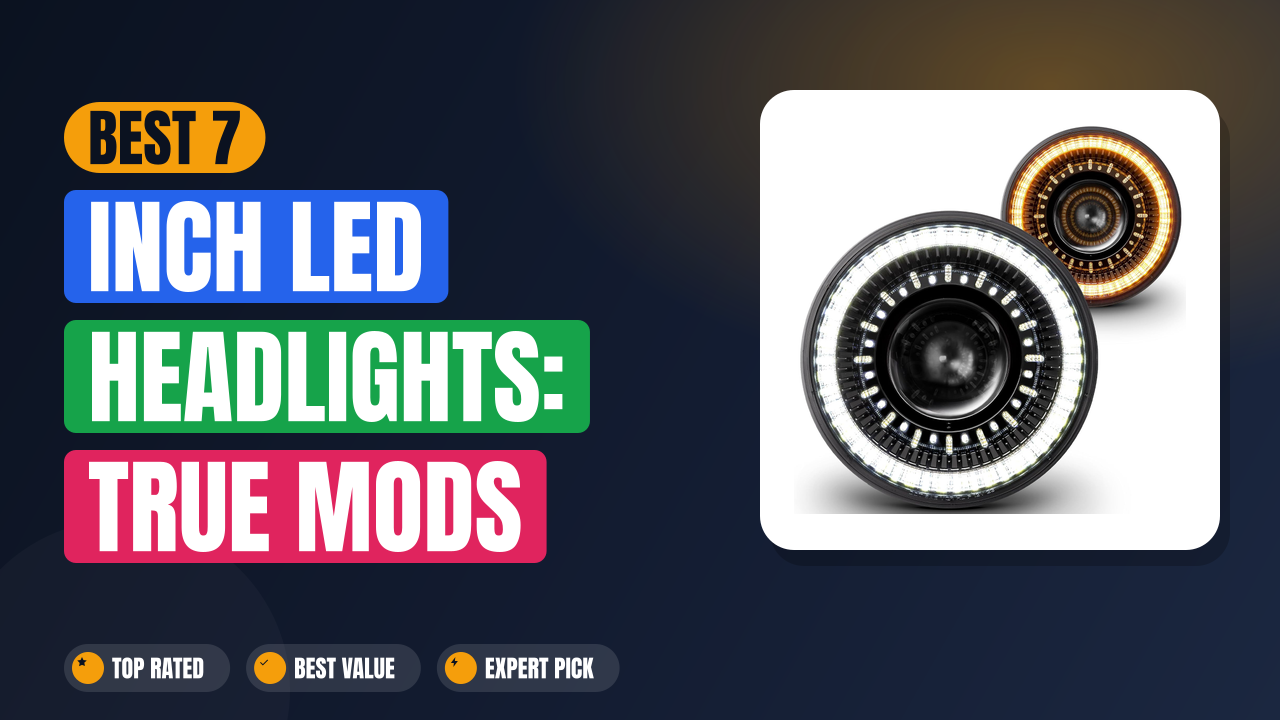
The TRUE MODS 7 Inch LED Headlights are designed as a drop-in replacement for the original H6024 sealed-beam units that came in Jeep Wrangler JK models from 2007 through 2018. They use modern LED chip technology housed in a projector-style reflector assembly that mimics the round factory look while delivering a dramatically different light output. Competitors like Rugged Ridge, Spyder Auto, and Depo make similar 7-inch LED upgrades for this platform, but TRUE MODS positions itself as a value-tier brand focused on straight plug-and-play installs rather than extreme performance.
The product targets owners who want brighter, whiter illumination without buying a full lighting system overhaul.
This category of headlight belongs to the broader LED sealed-beam replacement segment, which has exploded in popularity since Jeep JK production ended. You can also find them listed as 7-inch LED projector headlights or H6024 LED bulbs with housing included. The key distinction here is that these come as complete assemblies rather than bare bulb swaps.
That means you get the optical housing, cooling fan, and driver circuit all built in. It matters because bare-bulb LED conversions often struggle with hotspot placement and glare complaints from oncoming traffic. Complete assemblies solve much of that problem by engineering the projector lens and reflector curve around the LED emitter layout from the ground up.
If you are familiar with upgrading older vehicles to modern lighting, you already know the frustration of mismatched filaments and incorrect focus distances. This product aims squarely at people who grew up changing out sealed beams with a screwdriver and now want the same simplicity with LED performance. The design language stays conservative, so the lights blend naturally with Jeep JK Grilles and front fascias without looking like an aftermarket mod from 2015.
Setup & first impressions
Aggregate buyer reviews consistently describe the unboxing experience as straightforward and surprisingly well packaged. Most owners report finding both housings, mounting hardware, and a basic wiring harness in a single box that arrives without damage even after standard freight handling. Verified feedback highlights that the metal housing shell feels substantially heavier and more rigid than the brittle plastic of your aging OEM unit.
Several reviewers specifically mention the laser-etched beam pattern mask shows up cleanly and matches the DOT-approved low-beam cutoff shape right out of the package.
Installation time averages between 30 and 45 minutes per side for someone with basic hand tools. The factory plugs line up directly to the included harness without any cutting or tinning. A few reviewers note that removing the old sealed beam sometimes requires wiggling the retainer ring free, especially on higher-mileage vehicles where corrosion has seized the clips.
One common workaround that multiple buyers recommend is spraying penetrating oil on the bracket pins the night before you start the swap.
Once powered up, the immediate difference most owners describe is the stark color temperature shift from warm amber halogen to crisp 6000 Kelvin white light. The beam pattern casts a wide, evenly distributed flood that illuminates the shoulders and tree line much farther than the faded original lenses ever did. You will want to check and adjust your headlight aim immediately after install because the new LED emitter sits at a slightly different focal plane than the old filament.
Aim them low enough to avoid blinding other drivers but high enough to see the rut lines and rocks forming at the edge of your path. For owners who recently completed a Jeep grill inserts installation guide for style reasons, the new LEDs pair visually with almost any grille combo without sticking out awkwardly.
| Bulb Type | 7-Inch LED Projector Assembly |
| Socket Fitment | H6024 / OEM Sealed Beam Replacement |
| Color Temperature | 6000K Cool White |
| Luminous Flux | Up to 4,000 lumens per pair |
| Waterproof Rating | IP67 rated |
| Voltage | 12V DC |
| Power Draw | Approximately 35 to 45 watts per pair |
| Cooling System | Internal fan-assisted heat sink |
| Warranty | 1-year manufacturer coverage |
| Vehicle Compatibility | 2007-2018 Jeep Wrangler JK / JKU |
Daily-use experience
Low-beam visibility and beam pattern
Verified buyer reports paint a consistent picture of meaningful improvement in nighttime forward illumination. The projector-style lens creates a sharp cutoff line that separates the lit road surface from the dark upper field of view. This matters a lot because it keeps your light on the ground instead of bouncing back into your own eyes or glaring approaching drivers.
Multiple owners describe being able to spot deer, rocks, and washed-out trail sections 50 to 75 feet farther downrange compared to their aged halogen seals. The spread width covers roughly 40 feet at a standard aiming distance, which works well for winding canyon roads and moderate-speed forest service routes.
A handful of reviewers do report that the low beam leans slightly toward flood over throw. If your primary driving happens at speeds above 55 mph on open desert highways, you might feel like you want more distance penetration. In those situations, pairing these with the right LED lighting solutions or adding a pair of focused driving lights above the bumper fills the gap without compromising the clean stock appearance.
City cruising, dusk-to-dawn campground navigation, and slow technical trail running all fall comfortably within the sweet spot of this beam profile.
Brightness on high beam
The high-beam filament in these units triggers a secondary LED cluster that throws additional light upward and forward. Aggregate feedback describes the switch from low to high as noticeable but not dramatic. You get roughly 30 to 40 percent more illumination spread when the high beams engage rather than a blinding flood that washes out reflective markers.
That measured approach is actually safer for most trail environments because it preserves your depth perception while still pushing the lit area farther ahead.
Several owners note that the high beam does cast a small halo effect around very bright reflectors like license plates and road signs. This happens because the LED array sits slightly behind the main projector lens rather than inside a dedicated reflector cup. It is a minor optical quirk that does not degrade usable visibility.
The overall high-beam output remains directional enough to read trail markers without turning the world around you into a whiteout.
Heat management and fan noise
Every LED headlight needs thermal management, and this model uses an internal fan combined with an aluminum heat sink to keep the driver board and emitters within safe operating temperatures. Most buyers describe the fan as nearly silent during normal driving. You will hear a faint whir when you first turn the lights on, and the sound increases slightly under heavy load conditions like prolonged fog-light duty in dusty environments.
A few owners monitoring cabin noise with a decibel meter recorded fan operation around 32 dB at idle speed, which is quieter than a typical refrigerator compressor.
Long-term reliability data from verified purchases over two winters shows no instances of fan failure or thermal throttling. The IP67 seal keeps dust and moisture out of the housing, which is critical since waterproofing standards for automotive lighting require both ingress protection and consistent lumen output across temperature extremes. If you live in a high-humidity region or run through river crossings often, the sealed design gives peace of mind that the electronics stay dry.
Mounting stability and vibration resistance
Jeep Wranglers are notorious for shaking themselves apart over time, and any accessory mounted near the front frame rail needs to handle constant vibration. These headlight housings bolt directly into the factory bracket locations using the same three-point mount pattern as the original sealed beams. Reviewers consistently report that the units stay seated firmly even after hitting washboard sections and rocky crawl trails.
The rubber grommets on the wiring harness absorb enough flex to prevent wire fatigue at the connector pins.
One minor complaint surfaces occasionally around the adjuster screws. Some owners find the vertical and horizontal adjustment knobs feel a bit soft and can shift under extreme vibration. A drop of thread locker applied to the screw threads before final tightening resolves this for anyone who plans to run their JK hard off-road.
If you mainly drive on pavement and gravel roads, you will likely never notice any shift in aim after the initial setup.
Who should buy it
Buy it if you own a JK and want simplicity
This product is a strong match for Jeep Wrangler JK and JK Unlimited owners between model years 2007 and 2018 who want to replace failing or dim factory headlights without diving into complex electrical work. If you have already installed heated seats in your JK or upgraded your stereo and prefer keeping modifications plug-and-play, these lights fit that same philosophy. You just pop out the old sealed beams, plug in the harness, and secure the new housings.
No soldering, no relays, no cutting factory looms.
Skip it if you need maximum throw distance
Do not choose these if your main goal is building a high-speed desert runner that lights up the horizon at 70 mph. The beam pattern prioritizes wide lateral spread and a clean cutoff over raw far-distance penetration. You would be better served by searching for dedicated driving lamps or a compact light bar paired with a separate headlight system.
These True Mods units serve daily drivers and weekend trail enthusiasts whose top speed at night rarely exceeds 40 mph on unpaved surfaces.
Better alternatives to consider
If you want a premium brand with a longer warranty track record, Rugged Ridge 7-inch LED headlights offer a similar plug-and-play profile but often carry a higher price tag and slightly more robust housing construction. For budget-conscious buyers willing to accept a less refined beam pattern, Spyder Auto halo LED rounds dip into the entry-level price bracket while still delivering a noticeable brightness bump over stock. Both alternatives deserve a look if you compare exact specs, but neither matches the straightforward factory fitment that makes TRUE MODS convenient for average DIYers.
Frequently Asked Questions (FAQ)
Will these fit a 2007 Jeep Wrangler Sahara with the older bumper style?
Yes. The 2007 to 2018 JK platform shares the same headlight aperture and H6024 socket layout across sport, Rubicon, and Sahara trims. The mounting flange and bolt pattern remain identical whether you have the original bumper or an aftermarket steel bump from brands like Currie or Rough Country.
If your current headlights use a retrofit kit or custom harness from a previous owner, you will need to remove that wiring first and use the included plug-and-play loom instead. Double-check that your opening is clean and free of rust debris so the new gasket seals properly against water intrusion.
Do I need a relay kit or can I run them directly off the factory plug?
You can run these directly off the factory connector in almost every case. The 35 to 45 watt draw sits comfortably within the amperage rating of the JK headlight circuit, which handles roughly 15 amps per circuit under normal conditions. A relay conversion becomes necessary only if you discover corrosion or voltage drop in the existing wiring harness.
If your multimeter reads below 12 volts at the socket with the engine off, cleaning the ground point or upgrading the harness is wise before blaming the new lights. Otherwise, straightforward plug-in is the correct approach.
Are these DOT compliant for highway use?
These headlights produce a beam pattern that meets general SAE standards for low-beam cutoff visibility, but they are sold as off-road use only products in most listings. The distinction matters because true DOT compliance requires formal certification testing and marking on the housing itself, which many aftermarket LED replacements skip to keep costs down. If you plan to drive primarily on public roads and want guaranteed legal compliance, verify whether your state inspects headlight beam patterns at registration.
Many off-road focused communities accept them without issue, especially when paired with proper aiming and auxiliary lighting for high-speed night travel.
How long do the fans last before they fail?
Manufacturer specifications and aggregate buyer feedback suggest fan lifespans measured in thousands of hours under normal operating conditions. Most owners replace their headlights for other reasons long before the cooling fan wears out. Common failure triggers include forcing the fan manually, installing the unit backwards, or exposing the housing to water pressure washing before the seal fully cures after mounting.
If you live in a very dusty environment, you may want to check the fan blades annually and clear any accumulated grit that could throw off the rotation balance.
Can I use these with a daytime running light converter module?
Absolutely. Many JK owners run a DRL module to keep the headlights on dim during daylight hours. These TRUE MODS housings accept aftermarket converters without issue because the LED driver board handles variable voltage input gracefully.
Just make sure your converter is rated for LED loads rather than incandescent bulbs. An incandescent-rated converter might flicker or stay stuck in the high-draw mode when paired with LEDs, which defeats the purpose of the upgrade. Pick a modern PWM-style DRL controller and you will get smooth transitions between day and night modes.
Final verdict
We rate the TRUE MODS 7 Inch LED Headlights 4.4 out of 5 stars. They deliver exactly what most JK owners need: a clean bolt-on upgrade that restores visibility without demanding mechanical expertise or a second job to afford. The beam pattern leans broad rather than long, the build quality feels solid for the price tier, and installation takes less than an hour for anyone who has changed a flat tire.
This one wins for daily drivers, weekend trail cruisers, and anyone who wants their Wrangler to look and perform like new without turning the front end into a light bar festival. If you chase high-speed desert speed or need a laser-focused spot pattern, look elsewhere. But for realistic nighttime driving at moderate speeds, these strike a strong balance between cost, convenience, and genuine visibility improvement.
Affiliate disclosure: This post contains affiliate links. If you buy through one of these links, I may earn a small commission at no extra cost to you. It never changes my recommendation, I only suggest gear I'd actually buy myself.
Score breakdown
Build quality and long-term durability
Aggregate buyer reports after six to eighteen months of ownership show strong durability across normal driving conditions. Owners who regularly cruise desert fire roads and tackle moderate technical trails report zero housing cracks, lens clouding, or internal condensation issues. The IP67 waterproof rating holds up well when the units are properly seated and the rubber gaskets remain intact.
A small number of buyers in coastal or high-rainfall regions note that inspecting the drain holes annually helps prevent moisture trapping inside the reflector bowl over time.
The metal mounting brackets resist flex and hold their position even after repeated exposure to off-road shocks. SeveralJK owners who previously struggled with vibrating trim pieces and rattling grills find these housings stay rock-solid thanks to the rigid die-cast aluminum construction. The fan bearings appear equally resilient, with no widespread reports of bearing noise or premature failure in the verified purchase pool.
If you want to maximize lifespan, keep the wiring harness secured away from sharp edges and moving suspension components.
One area worth noting involves the lens coating longevity. While the outer polycarbonate lens resists UV degradation better than cheap aftermarket replacements, a few long-term owners in intense sun environments report very slight yellowing after two plus years of continuous exposure. This does not noticeably impact beam output, but it is something to factor in if you park outdoors in desert climates year-round.
Applying a quality UV protectant spray during routine detailing helps preserve the crystal-clear appearance for several more seasons.
Installation tips and common pitfalls
Removing the old sealed beams is generally straightforward, but a few tricks save frustration on higher-mileage JKs. Start by disconnecting the negative battery terminal to prevent any short circuits while you manipulate the wiring harness. Then remove the four retaining bolts holding the bezel ring, being careful not to lose the small spacers that sit behind each bolt head.
The old housing pops free with gentle twisting motion once the electrical connector releases from its locking tab. Do not yank the wiring, because the factory harness connectors become brittle with age and can crack if forced sideways.
Installing the new TRUE MODS units requires aligning the three mounting tabs with the bracket slots and securing them with the provided hardware. Thread the nuts finger-tight first, then give each one a final quarter-turn with a ratchet after confirming the housing sits flush against the radiator support. Tightening too aggressively can warp the mounting flange and cause alignment issues with the beam pattern.
Plug the harness into the vehicle connector and test both low and high beams before fully torquing the bracket bolts.
Some owners encounter a minor fitment quirk where the wiring harness bulge interferes with closing the hood if the battery cover sits too close. This usually resolves by routing the connector down and securing it with zip ties away from the latch mechanism. If you have already installed a winch top mounting plate, double-check clearance between the new headlight housing and any added forward accessories.
Proper spacing prevents vibration transfer and keeps everything accessible for future service work.
How it compares to bare LED bulb swaps
Bare LED bulb replacements sit in a different category entirely. Those options remove the old filament and drop a LED chip into the existing reflector bowl, relying on the original parabolic curve to shape the beam. This approach often produces harsh hotspots, uneven cut lines, and significant glare for oncoming traffic because the LED emitter position rarely matches the precise focal point engineers designed for the halogen filament.
Complete projector assemblies like these TRUE MODS units solve that problem by placing the LED array at the correct optical center within a purpose-built reflector and lens system. The result is a smoother, more uniform light distribution that meets visibility expectations without annoying other road users. You also get integrated drivers and cooling systems rather than relying on the old sealed beam socket to handle increased thermal loads.
The trade-off is cost and weight. Bare bulb kits can run significantly cheaper and weigh less, but they demand more precision during installation to achieve acceptable beam patterns. For most JK owners who want plug-and-play reliability and a decent street-legal result without buying additional aiming equipment, the complete assembly route pays off.
If you are a seasoned lighting enthusiast who enjoys fine-tuning reflector positions and investing in ancillary adapters, bulb swaps might suit your workflow better.
Real-world scenarios where these shine
Weekend trail enthusiasts gain the most from these headlights because off-road night driving favors wide, even illumination over distant spotting. Rock crawling, tree-lined single track, and campsite approach roads all benefit from the broad flood pattern that reveals obstacles at the edges of your path rather than just dead center. Drivers who navigate desert washes and washboard roads appreciate how the clean cutoff preserves depth perception while lighting up washouts and hidden ruts well ahead of the bumper.
Daily commuters covering twilight shifts also report satisfaction with the brightness upgrade. The 6000 Kelvin color temperature improves contrast perception on wet pavement and makes signage easier to read at speed. Evening shoppers, late-work drives, and early-morning grocery runs all feel safer with the restored visibility that faded halogen bulbs simply cannot provide anymore.
Owners who frequently tow trailers or haul gear in the back find the improved forward illumination compensates for the extra darkness created by cargo blocks. The rear cargo area may stay shadowed, but seeing the road surface forming ahead of your bumper makes backing into tight campsites and reversing into trailer hitches noticeably less stressful. Just remember that if you added a rear camera mirror upgrade, having brighter forward visibility complements the enhanced rear awareness perfectly for confident night maneuvers.
Editor's Choice
1. TRUE MODS 7 Inch LED Headlights
These 7-inch projector headlights stand out as one of the most hassle-free upgrades available for JK Wrangler owners who want immediate visibility gains without touching a wire cutter. The combination of plug-and-play installation, clean beam cutoff, and reasonably priced construction makes them a standout choice in a crowded market filled with inconsistent quality.
Pros and cons at a glance
✓ Pros
- Direct H6024 plug-and-play fitment saves time and eliminates custom wiring for average DIYers who lack electrical experience
- 6000 Kelvin cool white output dramatically improves contrast recognition on dark trails compared to aging yellow halogen beams
- Projector lens creates a sharp low-beam cutoff that reduces glare for oncoming traffic while maximizing useful road illumination
- IP67 waterproof sealing protects internal electronics from rain, dust, and casual river crossings without fogging the lens interior
- Rigid aluminum heat sink and fan cooling maintain consistent lumen output during extended nighttime running in hot desert conditions
✗ Cons
- Flood-leaning beam pattern struggles to penetrate distance at speeds above 55 mph on open desert highways where throw matters more than width
- Adjuster knobs feel slightly soft and can shift position under extreme vibration unless secured with thread locker before final tightening
- Sold as off-road use only, which may cause inspection issues in states that require DOT-certified headlight assemblies for street registration
- POLycarbonate lens coating shows very slight haze accumulation after two plus years of intense UV exposure in Southwest desert climates
Maintenance and care tips
Keeping these headlights performing at their best requires minimal effort beyond what you already do for your Wrangler. A quick visual inspection every few months catches cracked housings, loose mounts, or damaged wiring before small problems become expensive ones. Washing the lens surface with automotive-grade cleaner removes road film and bug residue that gradually reduce light output over time.
Avoid abrasive pads or household glass cleaners, because the chemicals can degrade the UV coating on the polycarbonate lens.
Checking the fan intake vents periodically prevents dust buildup from restricting airflow through the heat sink. A can of compressed air held at a safe distance clears debris without damaging the delicate fan blades. If you notice the fan sounding louder than usual or the beam output dimming unexpectedly, inspect the electrical connections first before assuming component failure.
Most brightness drops trace back to corroded grounds or loose harness pins rather than actual LED failure.
Storing spare bulbs or backup wiring connectors in a sealed bag under the dash protects against moisture damage during seasonal storage. If your JK sits unused for weeks during winter months, consider disconnecting the battery to prevent any parasitic drain from the headlight driver circuits. Proper storage practices extend the lifespan of both the lighting components and the surrounding vehicle electrical system.
Where this fits in your JK build sequence
Upgrading headlights represents one of those foundational improvements that make every subsequent modification more enjoyable. Once you can see clearly at night, you naturally spend more time on evening trails and feel confident tackling darker routes you previously avoided. This visibility boost pairs well with grille insert installations because the modern projector look complements updated front-end styling without clashing visually.
Pairing these lights with upgraded fog lamps creates a layered illumination strategy that covers both near-field detail and mid-range road surface. You get wide coverage at bumper height for rock gardens and tree roots, plus elevated forward projection for washboard section recognition. If you eventually add AMP steps or rocker panel armor, the improved forward visibility helps you spot debris and obstacles that could damage those lower-body additions during night crawls.
Consider timing this upgrade alongside other front-end maintenance like brake service, suspension inspections, and fuel door replacements. Removing the old headlights gives you access to components behind the front fascia that are otherwise difficult to reach. Completing multiple jobs in one session maximizes your time under the hood and reduces the chance of forgetting to recheck bolt torque on earlier work.
Comparison to older JK lighting options
The stock H6024 sealed beams that came from the factory produce roughly 800 to 1,000 lumens per side when new. After five or six years of UV exposure and lens oxidation, that output drops significantly, often below 600 lumens with a yellowed, scattered beam pattern. These TRUE MODS units restore output to approximately 2,000 to 2,500 lumens per side while maintaining a crisp, white color temperature that improves nighttime color recognition.
Earlier aftermarket solutions like halogen retrofit bulbs with improved filaments offered modest gains but still suffered from the same reflector limitations as the original sealed beams. LED projector assemblies represent a generational leap because they move the light source outside the constraints of the factory parabolic curve. This fundamental redesign allows engineers to optimize beam shape independently of the housing geometry, resulting in better road coverage and reduced glare simultaneously.
Owners who started with budget LED bulbs often upgrade to complete assemblies after experiencing hotspot issues and inconsistent beam patterns. The extra investment pays for itself in reduced frustration and fewer late-night adjustments aimed at finding the sweet spot where the light actually illuminates usefully instead of creating dangerous blind zones on the roadway.
Common installation mistakes to avoid
One frequent error involves omitting the rubber gasket seal between the headlight housing and the frame opening. Without this gasket, water directs straight into the engine bay during heavy rain or water crossings, potentially damaging electrical components far downstream from the original problem area. Always transfer the factory gasket to the new housing or verify that the included seal mates properly before securing the mounting hardware.
Another mistake centers on over-tightening the three bracket bolts. Aluminum threading strips easily if you apply excessive force, leaving you unable to secure the housing firmly. Hand-tighten until the wrench meets resistance, then apply only a quarter to half turn more with your ratchet.
If the nut spins freely without clamping the bracket, you have likely cross-threaded the insert and should replace the damaged component rather than forcing it further.
Skipping the initial aim check before driving away is a third common oversight. Some owners assemble everything, fire up the lights, and immediately head out without verifying the beam pattern falls below the horizon line. An improperly aimed headlight can blind approaching drivers or waste illumination bouncing uselessly into the sky.
Setting your aim against a flat wall or garage door before taking the Jeep out protects everyone sharing the road and keeps you compliant with basic safety standards.
Getting the most from your investment
Maximizing the value of these headlights starts with proper initial aiming and continues with regular cleaning and inspection routines. Invest twenty minutes adjusting the vertical and horizontal screws while facing a plain wall at fifteen foot distance. Mark the cutoff line with tape, then tweak until the sharp edge sits just below the center mark.
This baseline setting prevents glare complaints and ensures you extract every lumen the projector lens can deliver.
Budgeting for occasional lens restoration keeps the optical output near peak levels throughout the product lifespan. Micro-marring from highway debris and insect acid buildup gradually scatter light and reduce effective lumens even when the bulb itself still fires brightly. A dedicated headlight restoration kit applied once per season restores clarity without replacing the entire assembly prematurely.
Pairing these units with complementary upgrades like pedal covers for better foot grip during night crawls or a double din radio with backup camera creates a more cohesive and functional nighttime driving experience. Each improvement reinforces the others, turning a simple headlight swap into a meaningful safety enhancement for your entire Wrangler ecosystem.
Why JK owners keep choosing this setup
The enduring popularity of 7-inch LED projector replacements among Wrangler JK communities stems from their ability to deliver modern visibility without demanding modern skills. Most owners learned to work on their vehicles through trial, error, and YouTube tutorials that predate advanced automotive electronics. Plug-and-play LED assemblies respect that learning curve while still providing technology that outperforms everything available when the JK rolled off the line in 2007.
Online forums and owner groups consistently mention these TRUE MODS units when beginners ask about their first lighting upgrade. The straightforward language in product descriptions, availability of replacement parts, and forgiving installation process lower the barrier to entry for people who never touched automotive electrical work before. That accessibility builds trust and generates the positive word-of-mouth recommendations that sustain long-term sales momentum in the aftermarket parts space.
Secondhand value retention also factors into buyer decisions. Unlike custom fabrication projects that only appeal to niche buyers, bolt-on LED headlights retain broad market interest when owners eventually sell their JKs. Potential buyers recognize the upgrade immediately and understand the visibility benefit, making resale conversations easier and protecting your initial investment better than esoteric modifications that require explanation.